
Agile Elephants
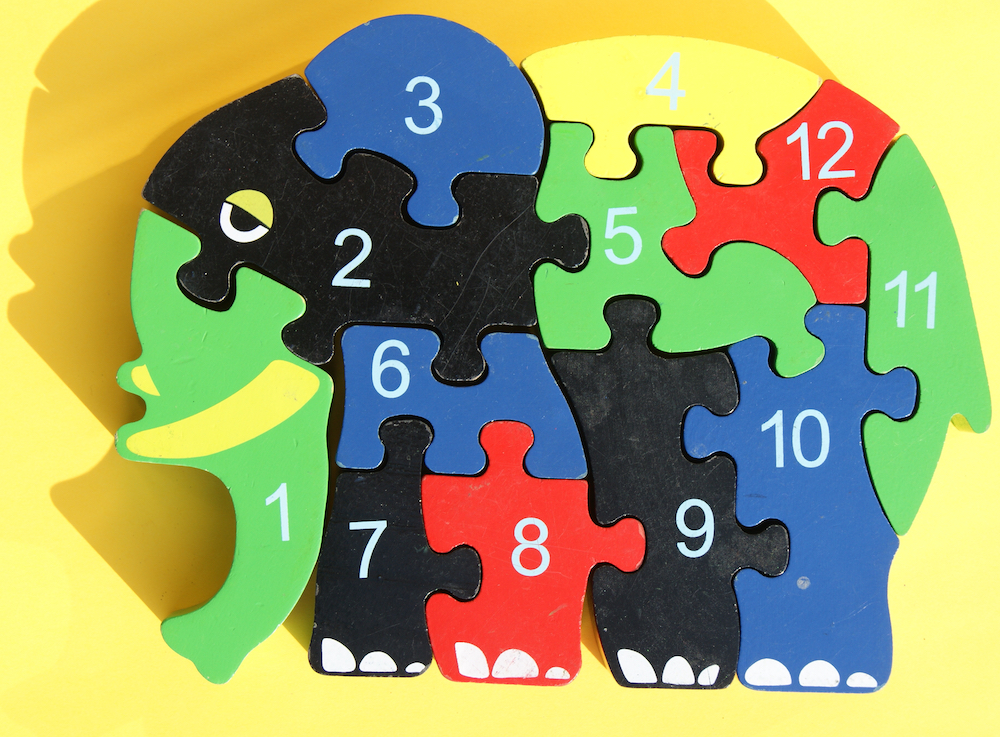
"Explore the whole elephant" is one of the classic slogans of systemic consulting. The question is, of course, how applicable this metaphor still is today. How does the organizational elephant fit into the VUKA world? And how can we make it dance, so to speak, in the age of agile & digital?
To answer these questions, I would like to expand the slogan a little. If companies are indeed comparable to elephants, then their members resemble the six blind men from the famous story. Depending on their position, these blind men describe the elephant as an agile snake (the blind man by the trunk), a dangerous lance (the tusk), a large fan (the ear), a stable pillar (the leg), a rough brick wall (the belly), or a rope (the tail).
It is not difficult to transfer this old story to the corporate world of the 21st century. Despite digitalization and agility, many still tend to be operationally blind: for sales specialists, everything is a question of sales, IT teams look primarily at technical aspects, for financial experts, the business can be presented in numerical form throughout, and so on and so forth.
This selective perception can be seen as a symptom of organizational siloing.
Everyone only sees the part of the elephant with which they are professionally concerned - and extrapolates these experiences (trunk, tusk, leg, etc.) to the big picture. Of course, this applies not only to the image of one's own company, but also to its relationship to the relevant environment.
In other words: the relationships with its customers, its suppliers or its competitors. The fact that the external view is also clouded by various filters and blind spots exacerbates the challenges facing companies today. It is no coincidence that open perception is one of the basic prerequisites for taming the rampant volatility.
This raises the question of how such perceptual problems can be overcome.
What has to happen for the blinkers to disappear, to open one's eyes, as it were, beyond one's own circle of vision?
To recognize the company in its real diversity?
And to use exactly this diversity as a resource in a highly agile market - after all, the elephant/organizational elephant moves in an extremely dynamic arena
With Russell L. Ackoff we can give a directional answer to this. The whole elephant does not result from the simple addition of the individual parts, but from their interaction. In other words, the elephant as a whole does not become faster by flapping its ears more violently or by improving the agility of its trunk. This only happens when all parts of the body increase speed in a coordinated way.
Applied to the business world, this means that we cannot make a company more agile if we do not set all areas in motion. Because companies are literally much more than the sum of their parts.
In order to fulfill the agile promises of more proactivity and responsiveness, smooth motion is required. To ensure that the right people do the right thing at the right time, trustworthy coordination is necessary - at least among all the people working on common goals. If, as is common these days, these are complex goals that require experts from a wide variety of fields to work together to achieve them, cross-departmental communication zones are needed. To speak with the elephant image: Zones where the trunk people can communicate with the tusk, leg and belly people and develop shared images of both the animal and the environment. To put it less metaphorically, it is only through an open exchange about function-specific experiences, not least with customers, that a reasonably accurate picture of the current work situation can emerge. And only on the basis of such a picture can the right decisions be made.
In some cases, the necessary exploration of the elephant may actually involve the entire company - for example, when a major transformation is imminent or for the definition of strategic initiatives. As a rule, one will be able to identify meaningful subsystems, smaller elephants as it were - such as those responsible for certain value streams, for a particular product or a specific market segment. And within these subsystems, it will be possible to appoint delegates who represent the viewpoint of a team or a specialist discipline, so that the rounds remain manageable.
In other cases, however, these rounds will involve 20, 30 or even more people. And although the agile KISS principle (keep it short & simple) applies to the meeting culture in particular, the number of people needed to adequately explore the current elephant cannot always be reduced to a manageable team size. Content complexity often goes hand in hand with social complexity.
But how can we prevent such large meetings from falling into the bad tradition of relevant elephant rounds?
That they run sluggishly?
Stay superficial?
Even degenerated into an arena of tactical trading?
Many years ago, professional large group work set out to provide directional answers to this.
In my next blog I would like to explain this using the example of a format that is widely seen as the heart of the agile approach: namely the retrospective. How can we design this format when it involves not 7 but 70 people? What is the difference between working with small and large groups? What structural elements can we use to foster intense discussions and pointed networking? And why are large retros indispensable when we are concerned with entrepreneurial agility?
Stay tuned!